
The Three Core Neuroscience Pillars of ACT (Scientific Pillars)
Attentional Control Theory — Human attentional focus depends on a precise balance between two systems: "goal-directed (top-down)" and "stimulus-driven (bottom-up)". In children with developmental disorders or sensory hypersensitivities, this exact equilibrium is impaired.
Neuroplasticity — Engaging in repetitive, high-frequency, and joyful structured challenges within the child's Optimal Arousal Zone directly remodels and strengthens the neural connections between the prefrontal cortex, basal ganglia, and cerebellum.
Dopaminergic Activation — Embedding rhythmic movements and immediate rewards within physical therapy maximizes the release of dopamine and norepinephrine in the brain, thereby fundamentally extending the child's sustained attention span.
Scientific Triaging Decision Tree: Three-Stage Progression Workflow
Step 1: Clinical Consultation & Basic Screening
Conducted by a registered clinical psychologist, this stage involves an in-depth, 1-on-1 interview and standardized assessment to precisely pinpoint the child's true status and physiological readiness regarding attentional regulation, sensory processing, and emotional stability.
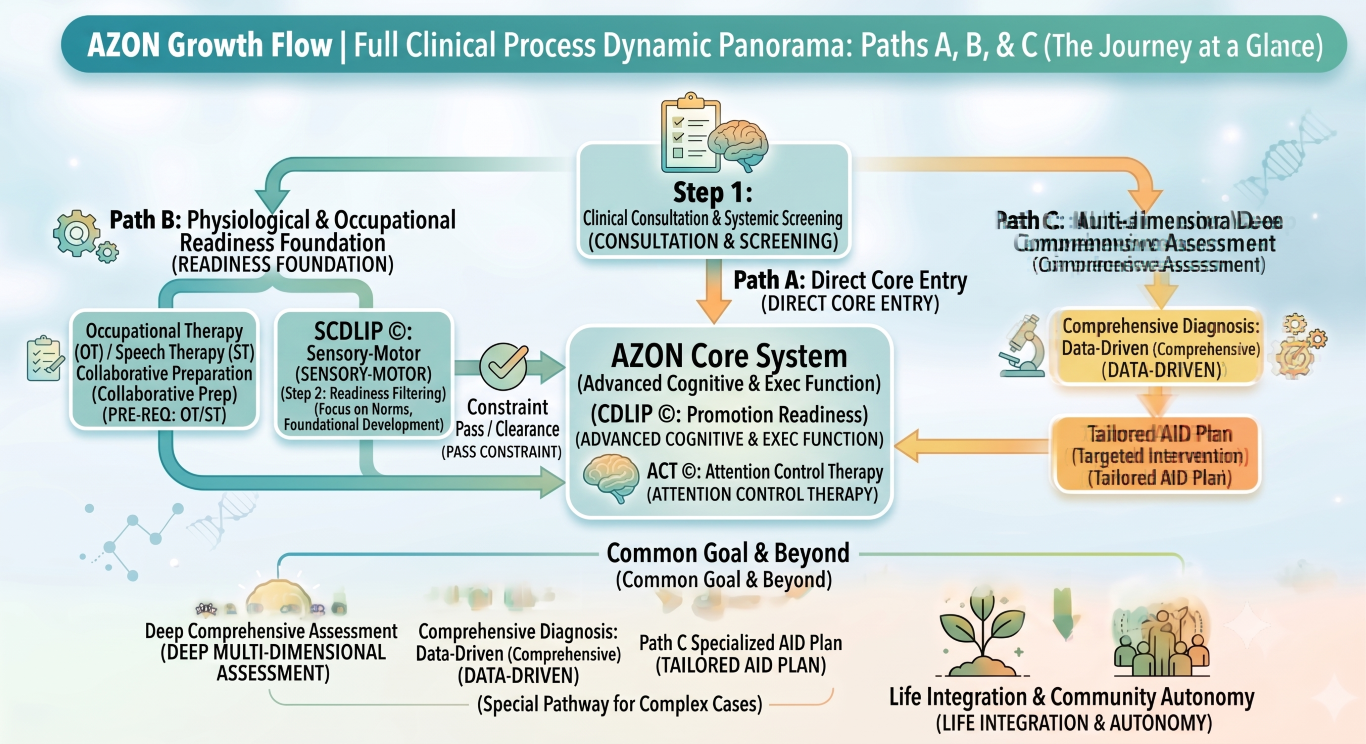
Step 2: The 3 Triage Paths
Path A [Direct Entry into Core Therapy] The child exhibits good baseline physiological readiness with no underlying developmental delays, presenting only higher-order executive function bottlenecks or distractible behaviors. ➔ Directly initiate the CDLIP © program under the ACT core system.
Path B [Prioritize Foundational Root-Building] Bottlenecks are present in underlying neurodevelopment (e.g., severe sensory integration dysfunction, weak core muscle strength, or unintegrated primitive reflexes). ➔ Prioritarily prescribe Occupational Therapy (OT) or concurrently initiate the SCDLIP © program. For cases presenting speech delays, Speech Therapy (ST) will be deployed concurrently.
Path C [Multi-Dimensional In-Depth Comprehensive Assessment] Designed for exceptional cases where multiple developmental disorders intertwine and clinical manifestations are highly complex. ➔ A clinical psychologist will conduct a deep, precise multi-dimensional diagnostic evaluation (Comprehensive Assessment) to tailor-make an exclusive AID plan.
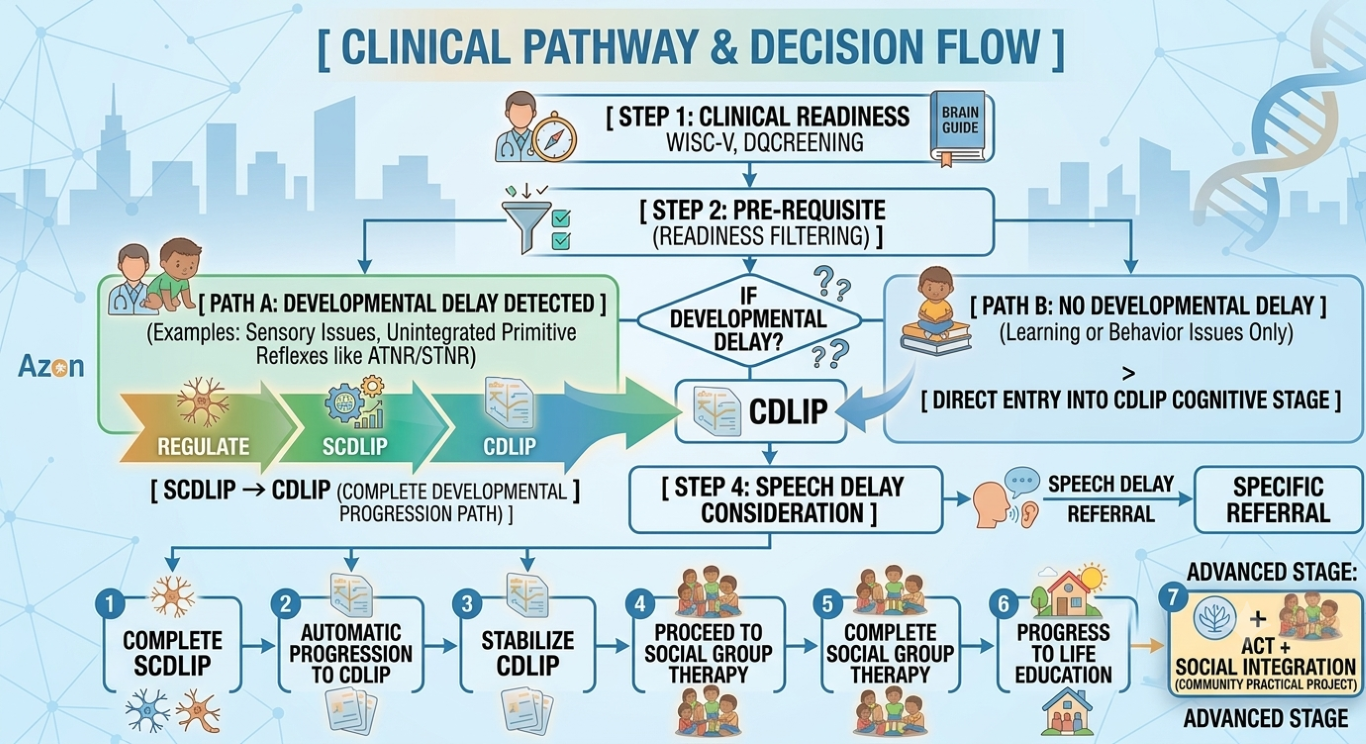
Step 3: The 4 Core Progression Benchmarks (Scientific Progression Rules)
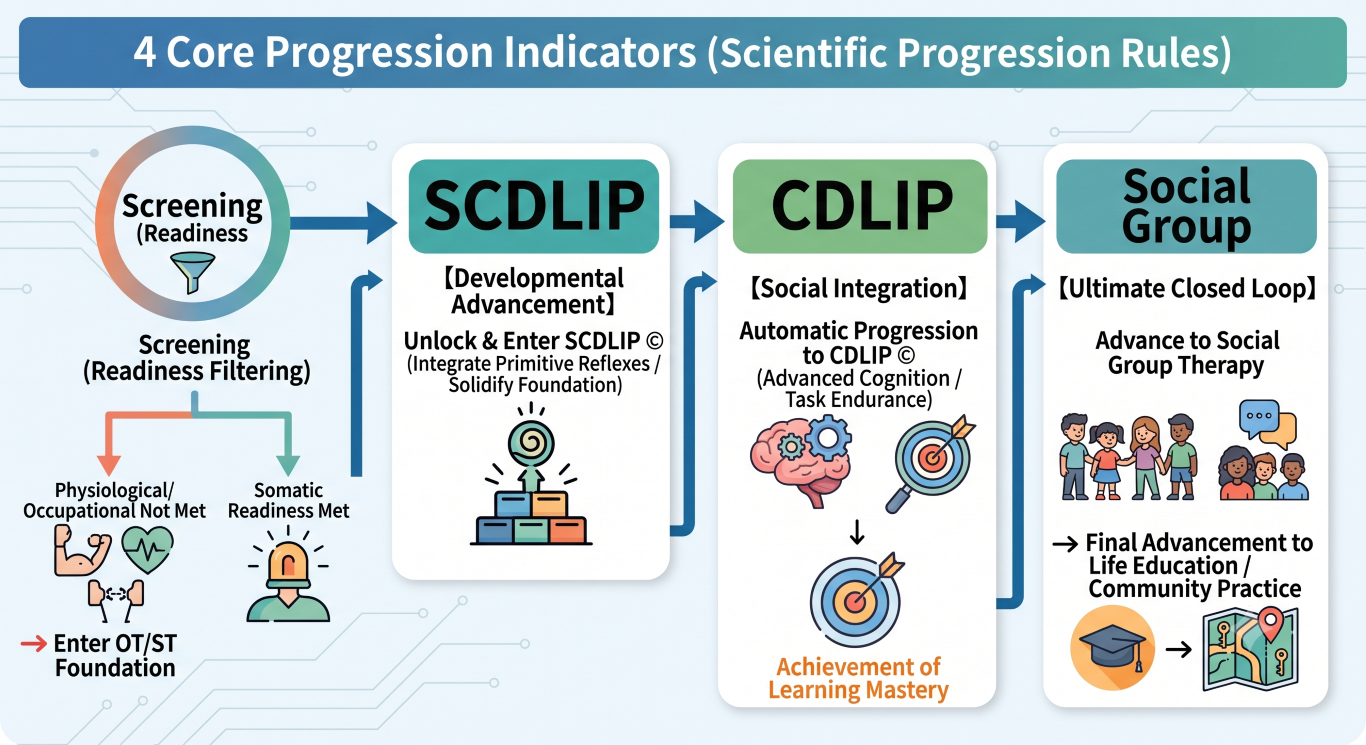
The Multi-Dimensional Clinical Delivery Master Matrix of the AID Framework
At AZON, every delivery layer carries extremely distinct clinical targets and observable behavioral metrics. We strictly respect the laws of natural development and never force a child across stages prematurely:
| Empowerment Level & Stage | Developmental Trajectory | Core Intervention Module | Core Focus: What is being trained? | Milestone Transformation |
|---|---|---|---|---|
| Layer 0 Readiness Triage |
Physiology | Occupational Therapy (OT) / Speech Therapy (ST) (Precise Prescription) |
Neurophysiological foundational stability and sensory regulation; baseline phonetic articulation, language comprehension, and expression. | [Physiological Readiness Achieved] Bodily control reaches baseline requirements; habitual resistance or avoidance behaviors when facing structured commands are eliminated. |
| Layer 1 Foundational Regulation |
Regulate | SCDLIP © Sensory & Core Developmental Learning Intervention | Sensory integration training, primitive reflex integration, brain-body coordinated movement, brain arousal modulation, and emotional control. | [Neurological Foundation Solidified] Brain arousal states normalize; fidgeting and restless micro-movements are drastically reduced, and attention span is significantly extended. |
| Layer 1 Higher-Order Development |
Learn | CDLIP © Cognitive Developmental Learning Intervention | Deep construction of advanced cognitive capabilities and executive functions, shaping of appropriate classroom behaviors, and academic environment readiness. | [Advanced Learning Capability Acquired] Task execution endurance is significantly enhanced, and the child demonstrates high autonomous self-regulatory power. |
| Layer 2 Social Participation |
Connect | Social Group Therapy | Establishment of Joint Attention, substantive peer interactions, and strict adherence to group rules. | [Farewell to Social Isolation] The child develops exceptional social participation capabilities and demonstrates sufficient neuro-flexibility within complex group settings. |
| Layer 3 Life Integration |
Live | Life Education | Shaping of sound values and wholesome character, fostering a sense of collective responsibility, and developing the independent ability to solve real-world life problems. | [Skills Internalized into Character] Capabilities naturally transition into reality, achieving dignified and substantive participation within the family, school, and community. |
| Layer 4 Ultimate Autonomy |
Autonomy | Community Practical Project | Fully autonomous, cross-domain real-world application, formation of a positive self-identity, and value-based independent living. | [Complete Life Integration Achieved] Forming teams to independently execute real-world community missions, completing their rite of passage through real-world immersion. |
 +6019-2971431