"No rigid lectures. We help children learn how to make friends through real, fun interactions."
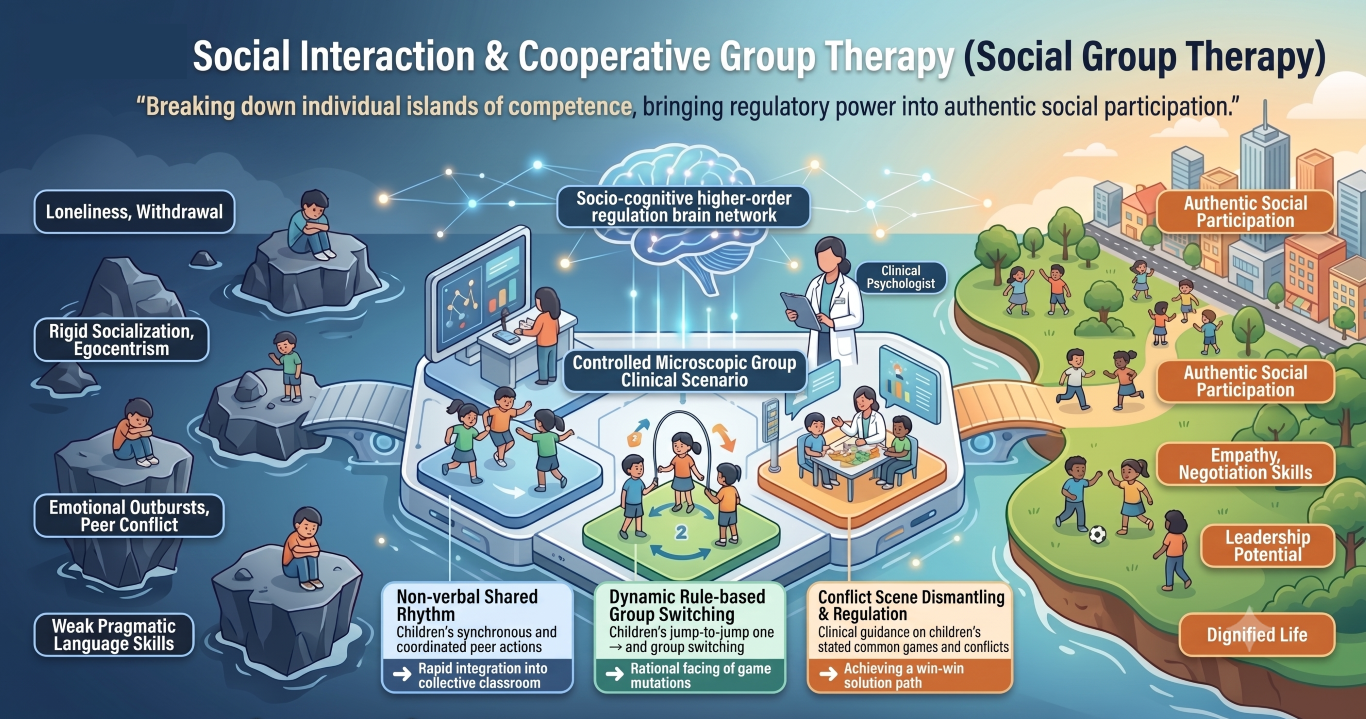
Making friends in real life is never a static "politeness exercise" of simple questions and answers at home or in an isolated room. School recess and playgrounds are filled with sudden surprises: peers interrupt, game rules change, kids argue over toys, and everyone has to learn how to read the moods of teachers and classmates.
If your child behaves wonderfully when facing an adult one-on-one but struggles the moment they enter a group, it is simply because they lack the tools to handle real-world group pressure.
AZON's Social Group Therapy rejects boring lectures. We turn complex social rules into exciting, real-world games. Guided by professional clinical psychologists and interventionists, your child will practice these scenarios "live" with peers, breaking out of isolation and smoothly blending into school life.
Does Your Child Experience These Common "Social Hurdles"?
If your child exhibits any of the following behaviors at kindergarten, primary school, or the local playground, it means their social and emotional skills need a gentle boost:
The "Invisible" Child: Wants to join in but stays frozen in the corner
➔ Acting like a ghost in the classroom. You can see in their eyes that they desperately want to play with others, but they cannot take that first step. If someone invites them, they often retreat due to anxiety or shyness.
➔ Acting like a ghost in the classroom. You can see in their eyes that they desperately want to play with others, but they cannot take that first step. If someone invites them, they often retreat due to anxiety or shyness.
The "My Rules Only" Child: Extremely rigid and must control everything
➔ When playing games, everything must go their way, and rules cannot bend even a little bit. If others do not follow them, they get upset instantly. They struggle to read expressions, hints, or shifts in a classmate's tone.
➔ When playing games, everything must go their way, and rules cannot bend even a little bit. If others do not follow them, they get upset instantly. They struggle to read expressions, hints, or shifts in a classmate's tone.
The "Can't Stand Losing" Child: Breaks down or acts out when things go wrong
➔ Low frustration tolerance. The moment they lose a game or get rejected, they have an immediate meltdown (crying, throwing tantrums, or pushing peers). Alternatively, they might withdraw entirely and feel deeply discouraged.
➔ Low frustration tolerance. The moment they lose a game or get rejected, they have an immediate meltdown (crying, throwing tantrums, or pushing peers). Alternatively, they might withdraw entirely and feel deeply discouraged.
The "Interrupter" Child: Struggles to hold a conversation or wait their turn
➔ Two-way conversations are a struggle. They constantly blurt out thoughts, interrupt the teacher, or abruptly switch topics to their own special interests when the group is discussing something else, making interactions awkward.
➔ Two-way conversations are a struggle. They constantly blurt out thoughts, interrupt the teacher, or abruptly switch topics to their own special interests when the group is discussing something else, making interactions awkward.
Our Three Core Practical Training Steps
Instead of memorizing dry social rules, we break friendship-building down into three actionable, game-based phases:
Step 1: Learning to Observe and Catch the Group's Rhythm
What we do in class: Team-based eye-contact passing, non-verbal gesture relays, and group rhythm synchronization challenges.
How it helps: It trains children to look at the people around them. When they go back to school, they can easily catch the teacher's non-verbal hints and adjust smoothly to the classroom's overall discipline and mood.
What we do in class: Team-based eye-contact passing, non-verbal gesture relays, and group rhythm synchronization challenges.
How it helps: It trains children to look at the people around them. When they go back to school, they can easily catch the teacher's non-verbal hints and adjust smoothly to the classroom's overall discipline and mood.
Step 2: Learning to Be Flexible When Plans Change
What we do in class: Strategic team rubber band jumping (Lompat Getah), spatial defensive positioning in "Pepsi-Cola", and dynamic movement matrices with sudden rule reversals.
How it helps: It boosts your child's cognitive flexibility. When peer disputes happen during recess or school schedules suddenly change, your child learns to stay calm and adapt rationally instead of getting stuck or stubborn.
What we do in class: Strategic team rubber band jumping (Lompat Getah), spatial defensive positioning in "Pepsi-Cola", and dynamic movement matrices with sudden rule reversals.
How it helps: It boosts your child's cognitive flexibility. When peer disputes happen during recess or school schedules suddenly change, your child learns to stay calm and adapt rationally instead of getting stuck or stubborn.
Step 3: Resolving Conflicts in Real Time and Handling Win/Lose States
What we do in class: Strategic sandplay and board games filled with competitive win/lose suspense, and mock peer-rejection scenarios.
How it helps: It builds resilience. The exact second a conflict or a breakdown happens during a game, the therapist hits the "pause button". We guide the child on the spot to cool down and use a mature pathway: "Pause & Calm Down ➔ Talk it Out ➔ Find a Compromise."
What we do in class: Strategic sandplay and board games filled with competitive win/lose suspense, and mock peer-rejection scenarios.
How it helps: It builds resilience. The exact second a conflict or a breakdown happens during a game, the therapist hits the "pause button". We guide the child on the spot to cool down and use a mature pathway: "Pause & Calm Down ➔ Talk it Out ➔ Find a Compromise."
Milestone Changes You Will Witness as a Parent
After joining our social and cooperative groups, you will see highly positive changes in your child's everyday social behavior:
- From Hiding Away to Confidently Joining In: The child develops a strong, healthy desire to form peer connections, mastering polite and natural ways to join group play (Joining Play) and keep a conversation going.
- From "Bad Sportsmanship" to Teamwork: They learn to accept losing gracefully, understand the joy of team collaboration, and learn how to compromise and soothe peers during minor friction.
- Internalizing Turn-Taking and Listening: They naturally restrain the urge to interrupt in a group setting, achieving a healthy habit of "Listening patiently, waiting for my turn, and speaking up appropriately."
Professional Credentials and Safety Safeguards
Official Allied Health Council Licensing (Act 774 Compliant)
All social group therapies at AZON are delivered directly by clinical psychologists officially registered with the Malaysian Allied Health Professions Council (MAHPC) and specialized intervention teams. This is not a casual daycare or a simple commercial workshop; it is medical-grade, scientific care.
All social group therapies at AZON are delivered directly by clinical psychologists officially registered with the Malaysian Allied Health Professions Council (MAHPC) and specialized intervention teams. This is not a casual daycare or a simple commercial workshop; it is medical-grade, scientific care.
100% Drug-Free Modality & Absolute Confidentiality
We rely entirely on science-backed psychological techniques, neuroplasticity, and behavioral guidance without any medication or harsh behavioral suppression. Sessions are conducted in a highly secure, private, and soundproof clinic environment to completely safeguard your family's privacy.
We rely entirely on science-backed psychological techniques, neuroplasticity, and behavioral guidance without any medication or harsh behavioral suppression. Sessions are conducted in a highly secure, private, and soundproof clinic environment to completely safeguard your family's privacy.
 +6019-2971431